An Art Service Organization - developing projects as living experiments for sustainable practices and an incubator for personal and collective transformation. Visual Arts Development Project, a community-based art organization that provides children, adults, and emerging artists with resources, workshops, and a venue to show and express their art form.
Join us at Loiter Galleries in Long Beach, California, for "2024 Oasis in the Woods," a display of "Land Art" or "Earth Art"—the Art of Deep/Risktaking Play in the Environment. The Opening Ceremony will be on Friday, August 23rd, from 6-8 p.m. The exhibit will be open on Saturday, August 24th, from 1pm - 6pm and Will Close on Sunday, August 25th, from 2-6pm.
Happy/L.A. Hyder remembers taking her first serious photograph on a fourth grade school trip, leaning over the railing to focus on the swirling water below. She purchased her first serious camera in 1969; her latest series is from a trip to Japan for an exhibit in 2023. After 48 years in San Francisco, where she purchased that first camera, she moved to Mendocino on the North Coast of California.
As a member of the Vida Gallery collective at the SF Women's Building, she produced her first installation in 1982. With Caryl Henry-Alexander, she created a labyrinth on the land in the first Oasis in Auburn, CA. Hyder says, 'Participating in this rendition of Oasis in the Woods is bringing all my creative senses and collaborative skills into play. I look forward to what we four bring together.'
Hyder's self-portrait 'New Country Daughter/Lebanese American is published in 'Lesbian Art in America', Harmony Hammond, ed., and in the third and fourth editions of 'This Bridge Called My Back', Gloria Anzaldua and Cherrie Moraga, eds. She was the founder and served as director of LVA: Lesbians in the Visual Arts (1990-2003). Her writing is published in 'Arab & Arab American Feminisms', eds: Rabab Abdulhadi, Evelyn Asultany, & Nadine Naber; 'Dispatches from Lesbian America, eds: Xequina Maria Berber, Giovanna Capone, Cheela Romain Smith.
Chicago Cultural Center, Michigan Avenue Galleries, 1st Floor East
Photo credit A. Bruton
Touring The Black Girlhood Altar at the Chicago Cultural Center with my granddaughter, we experience such a powerful, moving installation. That needed no words to tell us what to experience.
Photo credit A. Bruton
Photo credit A. Bruton
Photo credit A. Bruton
photo credit: Scheherazade Tillet, The Offerings to Yemaya, Rainbow Beach Chicago, 2021)
A Long Walk Home is a national art organization that empowers young people to end violence against girls and women. Since its inception in 2003, A Long Walk Home has built a powerful collective of artists, activists, healers, survivors, scholars, and women and girls of color leaders. We are committed to increasing resources and opportunities for society's most vulnerable girls and women in the Chicago area -- low-income girls and women of color, those with disabilities, and LGBTQ-identified -- and those most impacted by violence.
During the uprising and global pandemic in 2021, A Long Walk Home's Chicago-based artists Scheherazade Tillet and Robert Narciso created The Black Girlhood Altar. The Black Girlhood Altar is a multimedia, artifact-based, video, and object-based artwork to create sacred spaces and honor the lives of Black girls and young Black women who have gone missing or been murdered. As a mode of urgent healing – weaving together commemoration and advocacy – the Black Girlhood Altar is built on years of engaged work in Chicago and taking on national prominence. This temporary monument traveled through various neighborhoods in Chicago before being exhibited at the Chicago Cultural Center. Other installations were at the Museum of Contemporary Art Chicago, Project Row Houses in Houston, Project for Empty Space in Newark, and the Minnesota State Capitol in St Paul. As a vital cultural institution in the heart of Chicago, the Chicago Cultural Center represents the democratization of arts for public life.
On Freedom Square: The Black Girlhood Altar is intended as a sacred site for missing and murdered Black girls and women. Assembled by A Long Walk Home's artists Scheherazade Tillet and Robert Narcisco and Black Girls in Chicago, the altar is a mixed-media, object-based installation initially created during the pandemic to transform public spaces from trauma sites to collective remembering and power.
The Black Girlhood Altar honors eight Black women and girls: Rekia Boyd, Latasha Harlins, Ma'Khia Bryant, "Hope," "Harmony," Marcie Gerald, Lyniah Bell, and Breonna Taylor, whose deaths or disappearances have galvanized A Long Walk Home's Black girl leaders to be activists and artists. In many cases, injustice defines their afterlives while their stories remain untold, their legacies honored by only a few.
The exhibit is presented in three distinct gallery spaces - Ritual and Prayer, Rest and Recess: The Courtyard, and Call and Response – each introduced by a distinctly colored lightbox.
Freedom Square: The Black Girlhood Altar aims to bring awareness to the issue of missing and murdered women of color, promote community accountability, end gender-based violence, and increase visibility. The exhibition creates a space for artists, families, and community activists to engage in public conversation.
A Long Walk Home is a Chicago-based national nonprofit that uses art to empower young people to end violence against all girls and women.
DATES TO SAVE:
Saturday, January 13
12-2pm
Daughters of Yemaya: Spiritual Altar Making
Michigan Avenue Galleries, 1st Floor East
Saturday-Sunday,
March 9-10
Time TBD
Black Girl Takeover: The Black Girlhood Altar Festival
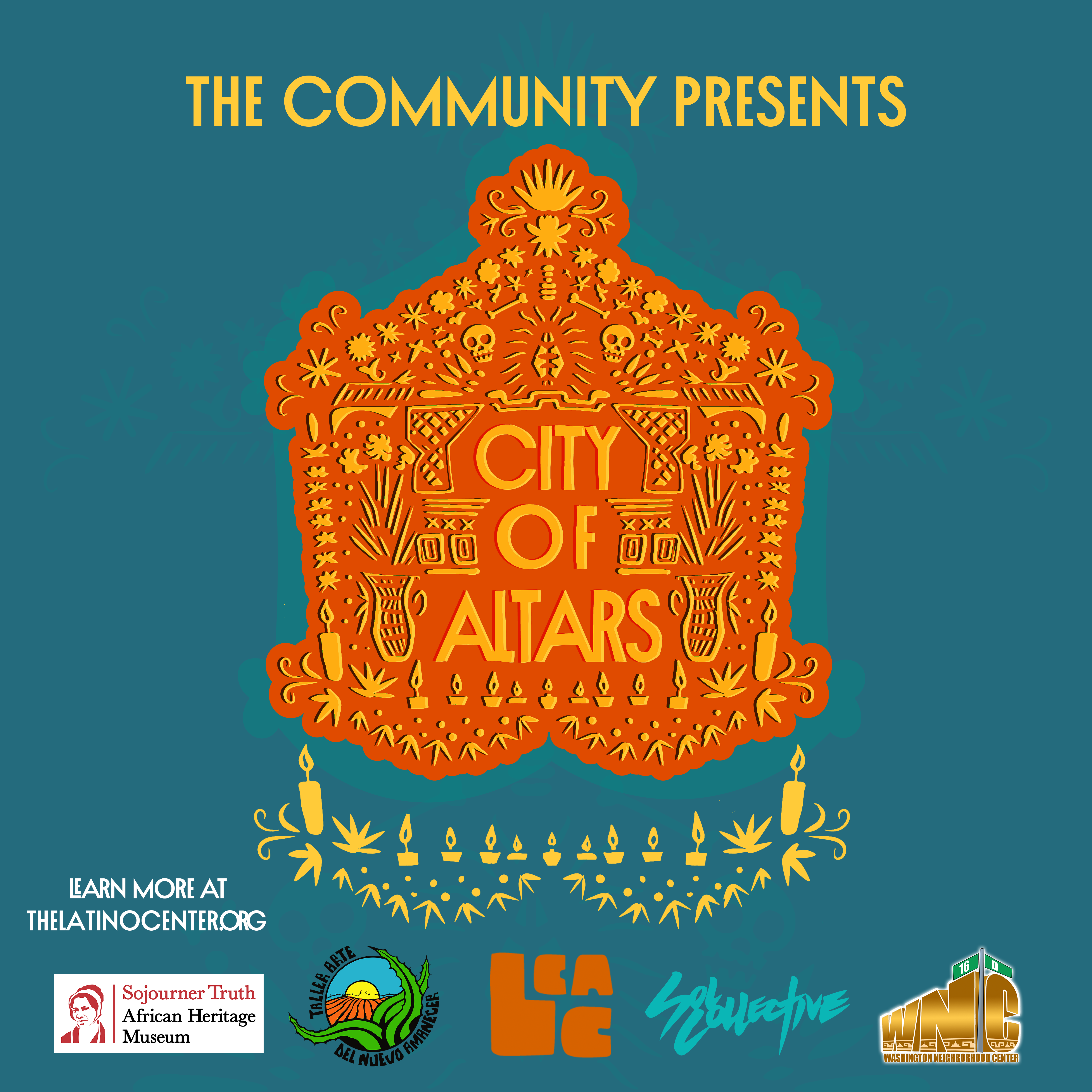
A message from Shonna McDaniel's Executive Director of SOJO Museum invites community altar makers to participate in the "City of Altars."
Kwanzaa is Celebrated December 26 -January 1 - Sojourner Truth African Heritage Museum will host a workshop on Tuesday, December 26, with the installation of Kwanzaa Altars and judging will happen on December 29, during the "Kwanzaa Festival of Life, Community, and Culture."
The Kwanzaa Festival of Life, Community, and Culture is a week-long celebration that honors the achievements of the Black community and provides support. It occurs from December 26 to January 1 at the Sojourner Truth African Heritage Museum.
On Friday, December 29, the festival is dedicated to Ujamaa, "Cooperative Economics," which is celebrated at the Florin Business Complex. Over 100 African-American businesses and vendors participated in this event.
On Saturday, December 30, there will be a celebration at the African Marketplace. Celebrating Nia (Purpose) is to make our collective vocation the building and developing of our community to restore our people to their traditional greatness.
On December 31, Kuumba will be celebrated with various creative arts projects and performances catering to the youth.
(This falls on a Sunday, but most activities will happen on Saturday; TBD ceremonies will happen.)
January 1, Imani, is our day of faith. A special ceremony will be held to bring a close to our week-long celebration of life and a closing reception for the City of Altar Installation, a Day of Rest.
Along with the Seven Principles(Nguzo Saba) and the seven days of Kwanzaa, seven symbols ortable implements are used to celebrate the holiday. These seven items are arraigned in an area set up as a
Kwanzaa altar or table in the home.
The seven symbols of Kwanzaa are:
Mkeka (m-KAY-kah): The Mat
A mat is woven of fabric, raffia, or even paper. The Mkeka is essential because the other holiday implements rest upon it.
Symbolizes the experiences, culture, achievements, and sacrifices of our ancestors upon which our lives are built.
Kikombe cha Umoja (kee-KOHM-bay cha oo-MOH-jah): The Unity Cup
Representing family and community unity. When the Unity cup is filled with water, juice, or wine, a little bit is poured out as a reminder and respect for our ancestors. The cup is then passed around and shared with those gathered, each taking a sip.
Mazao (mah-ZAH-oh): The Crops
The fruits and vegetables that are the result of the harvest. Bananas, mangoes, peaches, plantains, oranges, or whatever might be the family favorites. The Mazao are placed on the Mkeka and are shared and eaten to honor the work of the people it took to grow them.
Kinara (kee-NAH-rah): The Candleholder
The Kinara holds the seven candles representing our African ancestors that symbolize the Nguzo Saba. The Kinara is placed on the Mkeka and holds the Mishumaa Saba (the seven candles).
Mishumaa Saba(mee-shoo-MAH SAH-ba): The Seven Candles
Seven candles representing the seven principles of Nguzo Saba are placed in the Kwanzaa Kinara. The colors of the candles are red, green, and black, which are the colors of the Bendera (or African Flag).
Muhindi (moo-HEEN-dee): The Corn
Represents the children (and future) of the family. One suke (ear) of corn is placed on the Mkeka for each child. If no children are in the family, one suke is still placed on the Mkeka to symbolize the community's children.
The Muhindi also represent the Native Americans, the land's first inhabitants. Without whom, there would be no corn, also known as Maize. It is used to acknowledge and respect their contribution to the culture and ancestors of African Americans.
Note: A single ear of corn can also be known as Vibunzi. Indian Corn is sometimes used.
Zawadi (zah-WAH-dee): Gifts
Kwanzaa gifts are given to children that will make them better people. The gifts should always include a book, video, or other educational item to educate and inform the child. There should also be a gift known as a "heritage symbol." Something to remind the child of the glory of the past and the promise of the future.
Since Kwanzaa is a relatively new holiday, you, your family, and your community can use great creativity to observe Kwanzaa. The area in your home where you set up the Kwanzaa altar or table can be decorated in the same spirit as other holidays. Create posters and banners to hang on the walls, and add African sculptures or other artwork to the display. Many crafts and decorations can be created by the children of the home to be used in your Kwanzaa display.
The City of Altars, Capital Region Creative Corps, and City of Sacramento Office of Innovation & Economic Development partly fund this project.
Together, we will activate our spaces throughout the fall of 2023 to honor our respective customs relating to Día de los Muertos and Kwanzaa. Collectively, we will shine a light on the issues that most impact our communities through the sacred practice of altar-making. Community members will be invited to create altars through workshops and will be encouraged to exhibit at our annual events.
Follow each of us to stay informed about this exciting project.
What: City of Altars, a program by the Latino Center of Art and Culture
When: 2023-2024, a bulk of the activities will take place from September to December 2023
Where: multiple sites throughout the region.
Overview: The Latino Center of Art and Culture was granted $117,000 through a Capital Region
Creative Corps grant. The grant's scope allows us to bring in organizational partners to strengthen our programs around Día de los Muertos. The goal is to work alongside sister organizations that will host social justice-driven workshops while co-creating altars alongside members from their organization and the community.
These sister organizations would also select lead altaristas and artists (5-7 total) who would develop their own cohorts of about 10-15 emerging artists. The goal is to leverage the altar, a sacred artistic practice, as the medium through which our community members share the issues that impact our collective communities.
Kwanzaa is Celebrated December 26th -January 1st - Sojourner Truth African Heritage Museum will host a workshop on Tuesday, December 26th, with the installation of Kwanzaa Altars and judging will happen on December 29th, during the "Kwanzaa Festival of Life, Community, and Culture."
The Kwanzaa Festival of Life, Community, and Culture is a week-long celebration that honors the achievements of the Black community and provides support. It occurs from December 26 to January 1 at the Sojourner Truth African Heritage Museum.
On Friday, December 29th, the festival is dedicated to Ujamaa, "Cooperative Economics," which is celebrated at the Florin Business Complex. Over 100 African-American businesses and vendors participated in this event.
On Saturday, December 30th, there will be a celebration at the African Marketplace. Celebrating Nia (Purpose) is to make our collective vocation the building and developing of our community to restore our people to their traditional greatness.
On December 31, Kuumba will be celebrated with various creative arts projects and performances catering to the youth. (This falls on a Sunday but most activities will happen on Saturday, TBD ceremonies will happen)
January 1, Imani, is our day of faith. A special ceremony will be held to bring a close to our week-long celebration of life and a closing reception for the City of Altar Installation, a Day of Rest.
"I trust you are beautifully, and I am sending deep appreciation for you, from my heart to yours!
This is a reminder that we are activating the exhibition we have woven together at Medicine for Nightmares next Sunday, September 10th, from 5:30 to 9 PM.
Please let me know if you would like me to hold space between performers for you to offer Palabra/ Poetry/Song; otherwise, I will introduce you to the crowd when and if you can join us in person.
Exhibition catalog that people can scan a QR code to learn more about you and your Arte.
Join us at Medicine for Nightmares Gallery & Bookstore for a gathering celebrating la Vida Sagrada through an Electric Flor y Canto Cultura Cura! with Sound, Poetry, Teatro, and Movement! This event is part of our current exhibit in the Galeria, “Onward in Gratitude & Joy” a group show curated by yAyA(j. Andrea Amezcua Porras)
An exhibition of mixed media Visual Arts including but not limited to silkscreen, paintings, photography, sculpture, textile, graphic design, and oil pastels.
Calling in appreciation and nurturing of our collective relationship with earth, air, water, fire, guardians, ancestors, y tierras we acknowledge as an Indigenous sacred space.
Walking in this world as an Indigequeer creative and collaborator, it is imperative that I tend to and grow spaces that see & support 2Spirit & QTPOC familia and accomplices alike. Our collective healing makes for mas support, bridging resources, familia bonds and joy !
This show includes artists from Tejas, New Mexico, Cuba, Southern and Northern California. I am grateful for the invitation and support of Medicine for Nightmares. Special Tlasakamati to AM of MA Series Arts, Classy Hippie Tea Co. & Bay Area American Indian Two Spirits ; Artist grant award.
This show is dedicated to the spirit of Elodia Amezcua Nieto, de San Felipe, Del Rio my madrina, y maternal tia.
Visual Artists: Odaymar Cuesta, Stan Padilla, Alpha M. Bruton, L Frank Manriquez, Jaren Bonillo, Amy Reed, Jesse Vasquez, Cris Escobar, Ruben Briones Reveles, Dom Dodda, Rosesharon Oates MadBoy, Txutxo Perez and Sen Mendez, MadBoy, Txutxo Perez and Sen Mendez.
J. Andrea Amezcua Porras {yAyA}
They/Them/Theirs
Independent community/ art curator working at the intersection of cultural, spiritual, civic & social engagement.
Co Founder: teatro Movimiento Molcajete 1997, MA Series Arts (Non Profit)
Junipers Garden is a small-scale family farm in Brandywine, Maryland. We grow herbs, flowers, African American heritage crops, and more. This year we are excited to offer a Herbal C.S.A. membership. The C.S.A. will provide fresh herbs, herbal products, seedlings, and nourishing foods. This C.S.A. is perfect for herbalists, foodies, gardeners, and spiritualists. Build your own home apothecary!
"2023 Summer Solstice: The Land" is a living, creative, and cultural experiment with sustainable practice at its center. It incubates the artist's and community's personal and collective transformation.
For one week, June 12-16, 2023, artists of diverse disciplines and ages will converge at Juniper's Garden for a week-long residency. Their collective goal is to build generational bridges while working with ideas and materials that emanate from the land to create installations that answer the question, "How we will rebuild our communities to be stronger and recreate sustainable places to live." Importantly, this conversation addresses environmental justice's physical and psychological dimensions and impact. The residency will occur in Maryland's Prince Georges's County, the Southernmost region, and its remaining rural tier.
On Friday, June 16, 2023, 6-9 pm, as part of the 2023 Summer Solstice Oasis In The Woods: An Art & Wellness Festival at Juniper's Garden, the artists will host an open house where they will be present to offer free and open to the public gallery walks. In addition, they will be contributing stories of their experiences with the South County ecosystem and the process by which their installations came together.
About the Facilitators, Samaria is a farmer, herbalist, and co-owner of Junipers Garden. She has worked in agriculture and food justice in the D.C. metro region for over ten years. Her innovative and visionary approach has helped to usher in accessible models of food access and community-centered care. She developed the first low-cost C.S.A. model, C.R.I.S.P., in DC 2016. Then went on to manage The Farm at Kelly Miller in NE DC for four years. She is also the co-founder of the D.C. Mutual Aid Apothecary, a mutual aid organization that connects people to herbal medicine, education, and community.
She began her herbalism journey in 2015 and has studied with Wild Ginger Herbal Center, Well of Indigenous Wisdom, and the Vermont Center for Integrative Herbalism. She is also a 2022 Braiding Seeds Fellow. Samaria and her partner Blain recently opened Junipers Garden, a small-scale vegetable and medicinal herb farm in Brandywine, MD, whose mission is to provide a space for black and brown people to be on land, reclaim their ancestral healing and farming practices, traditions, and seeds and gain access to valuable knowledge and resources. The farm hosts seasonal events, herbalism workshops, retreats, and natural building workshops.
Special thanks to the Black Church Food Security Network, Future Harvest, and Maryland Market Money participating markets for helping us compile this perpetually growing list. If we left somebody out, it was not intentional. Please let us know using the form below.
Maryland
Harwood Community Garden Baltimore, MD
Hidden Harvest Farm Baltimore, MD
Honey Hemp Farms Upper Marlboro, MD
Jenny's Market Friendship, Maryland
Kindread Hill Farm Ellicott City, MD
Maxine's Garden at Pleasant Hope Baptist Church Baltimore, MD
My Mustard Seed St. Leonard, MD
Myles Produce Capitol Heights, MD
Native Mountain Farm Boonsboro, MD
New Brooklyn Farms Prince George's County, MD
Peaceful Acres Farm Glenwood, MD
Plantation Park Heights Urban Farm Baltimore, MD
Pop! Farm Baltimore, MD
Primo Noir Capital Heights, MD
Purple Mountain Organics Takoma Park, MD
Real Food Farm Baltimore, MD
Strength to Love II Baltimore, MD
Sweet Love Flower Farm Upper Marlboro, MD
Tripple Springs Farm Brandywine, MD
Whitelock Community Farm Baltimore, MD
Windy Willow Farm Sunderland, MD
804 Cattle Company Upper Marlboro, MD
Backyard Basecamp Baltimore, MD
Baltimore Free Farm Baltimore, MD
Bearfoot Farm Baltimore, MD
BLISS Meadows Baltimore, MD
Bon Secours Community Works Baltimore, MD
Cherry Hill Urban Community Garden Baltimore, MD
Elements of Nature Clinton, MD
Curemore Farms Upper Marlboro, MD
Deep Roots Farm Brandywine, MD
Dodo Farms Brookeville, MD
Double Z Cowboy Corral Faulkner, MD
Empower Project Baltimore Baltimore, MD
Eco City Farms Riverdale, MD
Filbert Street Garden Baltimore, MD
Flower of the Forest Farm Lexington Park, MD
Four Mothers Farm Princess Anne, MD
Friends of Great Kids Farm Baltimore, MD
The Green Anarchist Annapolis, MD
The Greener Garden Urban Farm Baltimore, MD
Harlem Park Community Farm Baltimore, MD
The H.A.T. Shop (Healthy Alternative Treatment) MD
Shonna McDaniel's spent a lot of time lying down this year. The local artist slipped from a ladder while working on a community mural project and broke her foot.
As a person who is constantly on the go and doing something, usually for other people, being unable to move pained her as much as the injury itself. The initial injury turned into others and she also developed life-threatening blood clots from being prone for an extended period.
McDaniels doesn’t know how to sit still; yet, when she was forced to, it still wasn’t idle time. The artist’s hands – and mind – were constantly working. Bedridden for five months, she discovered new ways to create and while recuperating, organized art shows and youth art activities.
McDaniels’ unapologetic work in showing the beauty of Black people and their contributions and her continued commitment to seeing Black artists have a seat at the table led to her selection by The OBSERVER as its 2022 Person of the Year.
Before her injury, McDaniels could be found running the Sojourner Truth African Heritage Museum in her beloved South Sacramento. She founded the museum in 1996 and has expanded it from a one-room space to a must-see cultural destination.
Local artist and museum founder Shonna McDaniel's has made a conscious effort to paint her people, educate the community and create opportunities for others to shine. Verbal Adam, OBSERVER
“We want to have information on great African kings and queens and individuals that they don’t speak of when they talk about art history, that they are too afraid to speak of when they talk about our history,” McDaniel's says of the space.
Visitors often encountered her going seemingly 100 mph, urging them to discover all the museum offers and pointing them to other activities throughout the building. She’s still going full speed, only these days, it’s in a wheelchair or a motorized scooter donated by a community supporter.
The museum is located inside the Florin Square complex. McDaniels’ roots in the space date back 30 years to when she worked for Barbara Nord, the first Black woman to own a payee service in Sacramento. The building was known as the Business Incubator at the time. It’s now home to a number of Black-owned small businesses and the African Market Place, which takes place every first and third Saturday. McDaniels also organizes Second Saturday activities as a way to include Blacks in activities that expose people to art and culture as they do in other parts of the city.
“We need that for South Sacramento,” she says.
African Market Place leader Ra West hosted an art exhibit featuring McDaniels during Second Saturday earlier this month. West says the spotlight was long overdue, as McDaniels usually is uplifting other people’s work.
Black Like Me Where others see a blank canvas, McDaniels sees possibilities. When she sees voids, she seeks to fill them. When others push back against her desire to see people of color depicted in public spaces, she just paints them with bolder strokes.
She focuses much of her artistic energy into painting Black women in all their melanated glory. Former mentor Akinsanya Kambon says that’s a skill in itself.
“You can’t just make Black skin by using one color,” says Kambon, who first taught McDaniels at the tender age of 4.
“Black skin has all the colors in it and I see Shonna is doing that,” he says. “You have to use reds and blues and greens, and purples, and yellows; all those colors come from the sun and the sun reflects off the melanin in the skin.
“The first thing in being an artist is you’ve got to learn how to see. The average person doesn’t know how to see those things, but when you study it, you learn how to see it and you also learn how to paint it. But it’s not easy. So when somebody does what Shonna’s doing, you can see that they put in a lot of work studying those skin tones or skin colors.”
McDaniels’ work has been featured in the recurring “The Black Woman Is God” exhibit at the SOMA Arts Culture Center in San Francisco. Co-curator Karen Seneferu says as an artist, McDaniels embodies what “The Black Woman Is God” is all about.
“Shonna McDaniels is an unsung heroine,” says the fellow artist. “Like the exhibit, Shonna’s art celebrates Black women as essential to building a more just society. Shonna McDaniels creates spaces that are sustainable to the community’s future.
“When she produces art, she expands the intersectionality of race, age and gender, dismantling stereotypes of Black women.”
McDaniels has taught art classes and conducted numerous workshops and exhibits. She also has been involved in such collaborations as the Visual Arts Development Project, Zica Creative Arts and Literary Guild, Kuumba Collective, and the Sacramento African American Nonprofit Coalition. She also advocates for Black inclusion in public art projects such as Wide Open Walls.
“Shonna is pure light and love in action,” says Sandy Holman, founder of the Davis nonprofit The Culture C.O.-O.P.
Holman met McDaniels at the African Market Place and says her life is better for it.
“She is fearless, committed and talented beyond measure, but I love her most for what she does for our community and her zeal to give back,” Holman says.
‘Woke’ Walls
“Woke” is a fairly contemporary term, but McDaniels says she always has been that way. She participated in her first Kwanzaa at age 5 and attended an African-centered Saturday school where she learned Swahili and was immersed in culture.
She credits her mother, Ollie McDaniels, who helps run the museum, for laying the foundation early.
“We had African masks, African paintings and images of Black people all throughout the house,” McDaniels says. “She was a part of the Black Panther movement. We would go down to Oakland and participate in the marches and other activities, so she kept our minds stimulated.”
McDaniels’ father, William McDaniels, spent time behind bars and was changed by the experience. He passed on that knowledge to his children.
“When he got into prison, he started to cultivate his Black mind and he started sharing that information with us as young people,” she says. “He started writing letters to me as a young child and sharing information about historical Black leaders. I’m getting letters with all these powerful history lessons in them.”
Her mother also joined the Nation of Islam and exposed her children to its ideology and self-sufficiency message. Both have influenced her art and community-focused activism.
“I definitely was inspired by the fact that the Nation had an entire block in Oak Park of businesses,” McDaniels says. “ It was like a Black Wall Street. I had never seen anything like it before.”
Today’s kids need similar exposure, she says.
“My mom involved us in everything that she could possibly imagine that would cultivate our Black minds and a lot of the parents are not doing that. That’s one of the biggest mistakes that’s happening today for our youth. Of course, we know they’re not getting that information in school.”
While educators were being damned nationally for teaching the realities of American history, McDaniels was educating local youth about their place in it through a docent program at the museum that gives them money for their pockets as well. While school districts across the country added classical Black titles to their lists of banned books, McDaniels was introducing youth to Black authors on the walls of her museum and supporting the local business, Escape Velocity’s Boys in The Hood Book Club, a literacy program.
For McDaniels, who hosts a Black memorabilia fest and the annual Festival of Black Women’s Hair, Body, Mental/Financial Health, Beauty and Art, it nearly broke her heart to hear a local teen say she “didn’t know anything about being Black until the George Floyd incident.” Also troubling, she says, are upper middle-class parents and celebrities with far-reaching platforms, who shy away from their Blackness and denounce the importance of young people knowing about their culture and their past.
“What our community does not understand is that our children are out here acting foolish and running amok and it is because they don’t have a knowledge of self,” she says. “If they had a knowledge of self and they loved self, then that would allow them to love others in their space. If they knew that they come from greatness, they wouldn’t be out here calling each other the n-word and the b-word; they would be on a whole other level of consciousness.”
‘This Work Is A Part Of My Soul’
During the pandemic, McDaniels and the Sojourner Truth Museum have minded the gaps for the community, hosting senior activities, providing weekly meals and hosting youth pop-up events and art lessons, complete with supplies. Some of the events were covered by city COVID-19 money, but McDaniels continued the activities even after the funds stopped this year.
“This work is a part of my soul,” McDaniels says. “It’s my life’s work and I want parents to get it, I want our children to get it; I want them to succeed, I want them to love each other. It doesn’t matter if the funding is not there. Like Malcolm said, ‘By any means necessary.’ So, if I have to come out of my own pocket, which, in the past, and still, sometimes today, I still do. I’ve always had that mind-set. I’ll go without to make sure that my community has.”
Kambon, a former Black Panther Party artist, is proud of McDaniels.
“I’ve seen her develop as one of the most accomplished artists in Sacramento, in terms of African Americans,” he says.
Kambon is also happy she has stayed true to her activist roots.
“We as artists have a responsibility to speak to our people’s struggle in this country because that’s why our ancestors gave us this talent. They gave it to us so we can carry the fight. We have to intensify the struggle,” Kambon says.
Supporters often caution McDaniels that she’s “doing too much,” but those words don’t seem to be in her vocabulary. She’s already focused on 2023 and getting an early start on securing funding for her annual Banana Festival that is a major fundraiser for the museum.
“A lot of people tell me, ‘You’re going to kill yourself trying to save your people,’ ‘You’re going to make yourself sick,’ or ‘You have made yourself sick,’” she says. “It’s just embedded in me to continue to do this work, and hopefully, before I transition, some type of major change will be made.”
THE OBSERVER proudly salutes Shonna McDaniels as its 2022 Person of the Year.
YaYa Porras reading at the Berkeley Poetry Festival in 1999. The event was held the first weekend of October at the University Art Museum and Sculpture Garden.
J. Andrea Porras / yAyA is a Queer, 2Spirit, Coahuiltecan descendant Chicana, madre of JAH’Sol Amaru, cultura cura curator, producer, intersectional artist, practitioner; with over 25 years experience in performance, organizing, facilitation, grant making, grant reviewing, philanthropy, and mentoring. Porras began their performative journey as a roller skating waiter edutaining and serving up Tex-Mex campo to mesa cuisine at her family’s local Bordertown haven/ restaurant. Amezcua’s was located in their beloved barrio and birthplace of San Felipe, Del Rio Tejas.
They have been offering intersectional multimedia arte between edutainment and story sharing, storytelling ceremonias through solo and collaborations for over 25 years.. Porras brings viewers into the past, present, and future via Charcoal Foot Travels spoken palabra and improvs, teatro y movimiento as relative and guest upon Sacred Indigenous Lands 4 decades and counting. They are self and community-funded and an honored culture bearers via commissions, grants, invitations, research, and opportunities. Porras también curates visual exhibitions, creates site specific installations, ritual performance, teatro y flor y canto movimiento. Most recently Current Classy Broadway Curatorial Resident in Oak Park, Sacramento.
Porras earned their B.A. from California State University Sacramento, Theater Dance, and Cultural Anthropology Departments, where they specialized in Black, Indigenous, and Chicano/Theater. They focused on acting, improv movement, playwriting, producing, and video documenting. Porras dedicated their early years at CSUS to recruiting hundreds of first-generation students from Sacramento high schools. They were recruited by the Education Opportunity Program as a student teachers/peer mentor in Ethnic Studies, Acting, Chicano Theater, Cultural Anthropology, and African-Caribbean dance. Simultaneously, Porras spent years as an artist in residence at elementary and middle schools in Sacramento, funded by The Sacramento Metropolitan Arts Commission. They studied, taught, performed, and participated in Inter-Tribal ceremonies as Caribbean Danza Mexika traditional dancers predominantly connecting and building in Northern California across the Southwest and later in Cuba, Mexico, Africa, and NY.
They crossed over from teaching artists and community cultural producers to Arts administrators and philanthropy focus in joining the Sacramento Metropolitan Arts Commission. They served as the city's Arts Education coordinator and later Co-founded, Directed, and Facilitated a Roots, Altars, and Movement course at World Arts Space. The WAS project brought together 8 artists for 8 weeks, 8 hours a day, offering free and accessible Arte y Cultura. An intergenerational community Artist and apprentice residency/ building relations with 100 emerging youth artists through an all-immersive arts training safe space embedded in the community of Oak Park in the Summers of 2004/ 05.
Porras also served as a community development organizer with Mutual Housing of California. In their 4 year term, they created civic leadership engagement and arts and cultural revival pop-up workshops in multiple incredibly diverse and intergenerational family-subsidized housing communities they served throughout the Sacramento region. Later came the call to action as manager, community, and art gallery curator at Taller Arte del Nuevo Amanacer, founded by Malaquias Montoya and Carlos Jackson and directed by Maceo Montoya. TANA is based in the rural community of Woodland, CA. Mentored by Malaquias, and leading an amazing and talented mentee /student/ artist staff, they collectively recruited and grew new generations of political poster makers on the satellite location for the University of California at Davis Chicana/o Studies Department.
Porras recently exited their 5-year role as Arts Grant Specialist for the California Arts Council, where they managed a portfolio totaling approximately $9 million in funding per year. Currently, they stand for love, dignity, and transformation as an agent for BIPOC communities as a member of the Caltrans Office of Race and Equity, Native American Liaison Branch Headquarters. They are a 2004 NALAC Leadership Institute graduate and an invited peer for the 2017 Advocacy Leader Institute. They are currently attending IAIA as a student in the Native American Art History certificate program. Porras, co-founded Movimiento Molcajete (1997) Contemporary Indigenous Teatro Co. & MA Series Arts (2018), a 501c3 non-profit MA Series Arts nonprofit 2018: dedicated to supporting performance, research & practice by women y queers of color, honoring the full spectrum of cultural and gender identities.
Berkeley Poetry Festival
Since 1998, the Berkeley Poetry Festival has honored activist writers by creating space for performance and presenting a lifetime achievement award. In 2013, Sharon Coleman and I, MK Chavez, took over organizing the festival. We dedicated ourselves to building an equitable event by uplifting the voices of BIPOC, LGBTQI+, and other writers who experience systemic violence and oppression.
It was with great heartache that we read the bold public letter written by two anonymous sexual assault survivors who are calling for accountability and healing from transgressions committed by former lifetime achievement award recipient Rafael Jesús González. You can read their letter here:
In 2015, we honored Rafael Jesús González because of the key role that he has played in our community as a leader and mentor. The Berkeley Poetry Festival Lifetime Award is not an award that can be retracted because it is an acknowledgment and an event that has already occurred. However, we are extremely hopeful that because of his background, Rafael Jesús González will step up as he has against other injustices and violence in the community and the world and do the work that must be done.
We know our community is hurt and in need of healing, and we are committed to supporting a process that honors the survivors in whatever way we can. Berkeley Poetry Festival celebrates the survivors' work and words and acknowledges that the burden should not be on survivors to do this necessary work.
To support the requests, we commit to:
• We will remove the celebration and centering of Rafael Jesùs Gonzalez from Berkeley Poetry Festival social media and future promotional materials, including the list of past lifetime achievement award recipients, to hold space for the healing work that is ahead (no later than Monday, August 21, 2022)
• Rafael Jesùs Gonzalez will not be included in future Berkeley Poetry Festival events.
Berkeley Poetry Festival also acknowledges the work of LA DASS , which makes the invisible visible while holding values that seek to humanize and heal.
Alpha Bruton, Toni Collie Perry (VADP Board members) presenting.
Panel Discussion- Creative Conversation "Are Black Women Loud"- Del Paso presented by Sojo Art Museum- 2013, this photo image becomes the art for Creative Conversations, on Blog Talk Radio. The show is a place where artists can schedule a time to call in and talk about their curatorial projects, rant, casual talk, or have a platform to discuss issues that matter. The show was launched October 10th - 18th, as part of the United States Department of Arts and Culture, "Dare to Imagine" Imagination Station. Stay tuned for more talk, as researchers invite artists to discuss "TACTICAL URBANISM."
Jennifer Andrea Porras, presentation during the Art and Activism
Porras has long been inspiring thoughtfulness around civil justice through dance, song, theater, and education. She shared stories from a life of activism, which she has passed on to her young son. Porras is the art center manager for the Taller Arte del Nuevo Amanecer in Woodland.
Presentation at the Crocker Art Museum in Sacramento. YaYa Porras has built her world around activism for decades. The daughter of educator activists, standing up for her beliefs came naturally.
“I learned how to march before I knew how to walk,” she said during her presentation.
The Buena Vista Rancheria of Me-Wuk Indians of California is a federally recognized Indian tribe. The Tribe has been listed by the Secretary of the Interior as such since 1985. The Tribe’s Rancheria land is a 67-acre parcel in Amador County just outside the town of Buena Vista.
Ancestor
YAYA', presents the work she is doing in "Art and Social Justice", and how she and members of her tribe are advocates for social justice issues.
On Nov. 19, four artists from Northern California and beyond presented their work and stories of activism at the Crocker Art Museum’s second Art Beyond Fear panel discussion. The artists who took to the stage represented diverse backgrounds ethnically and professionally, showing how activist art can be woven into our society’s most important conversations through various channels. Dance, education, spoken word, theater, public political actions, and painting were the avenues these artists have used to unite communities in hopes of a better future.
Panelist Artistic Presentations:
Oakland native Milton Bowens opened the night with commanding spoken-word pieces accompanied by multimedia collage paintings.
Chucha Marquez, a queer Chicano printmaker, and digital illustrator, art is about authentic voice and accessibility.
Sarah Wellington came all the way from New York to share her experience with WE WILL NOT BE SILENT, an ongoing public action language project.
Tickets to the final talk, scheduled for Thursday, Jan. 28 at 6 p.m., can be purchased online or by calling 916-808-1182.
Research: Copyright Credits Art & Activism Go Hand-in-Hand


.jpg)




.jpg)


.png)


