Showing posts with label Panel discussions. Show all posts

Thursday, September 14, 2023

"Kwanzaa Festival of Life, Community, and Culture."

 A message from Shonna McDaniel's Executive Director of SOJO Museum invites community altar makers to participate in the "City of Altars." 


Kwanzaa is Celebrated December 26 -January 1 - Sojourner Truth African Heritage Museum will host a workshop on Tuesday, December 26, with the installation of Kwanzaa Altars and judging will happen on December 29, during the "Kwanzaa Festival of Life, Community, and Culture." 

The Kwanzaa Festival of Life, Community, and Culture is a week-long celebration that honors the achievements of the Black community and provides support. It occurs from December 26 to January 1 at the Sojourner Truth African Heritage Museum.

On Friday, December 29, the festival is dedicated to Ujamaa, "Cooperative Economics," which is celebrated at the Florin Business Complex. Over 100 African-American businesses and vendors participated in this event.

On Saturday, December 30, there will be a celebration at the African Marketplace. Celebrating Nia (Purpose) is to make our collective vocation the building and developing of our community to restore our people to their traditional greatness.

On December 31, Kuumba will be celebrated with various creative arts projects and performances catering to the youth.
(This falls on a Sunday, but most activities will happen on Saturday; TBD ceremonies will happen.)

January 1, Imani, is our day of faith. A special ceremony will be held to bring a close to our week-long celebration of life and a closing reception for the City of Altar Installation, a Day of Rest.
 Along with the Seven Principles(Nguzo Saba) and the seven days of Kwanzaa, seven symbols ortable implements are used to celebrate the holiday. These seven items are arraigned in an area set up as a 

Kwanzaa altar or table in the home.

The seven symbols of Kwanzaa are:
Mkeka (m-KAY-kah): The Mat
A mat is woven of fabric, raffia, or even paper. The Mkeka is essential because the other holiday implements rest upon it.

Symbolizes the experiences, culture, achievements, and sacrifices of our ancestors upon which our lives are built.

Kikombe cha Umoja (kee-KOHM-bay cha oo-MOH-jah): The Unity Cup
Representing family and community unity. When the Unity cup is filled with water, juice, or wine, a little bit is poured out as a reminder and respect for our ancestors. The cup is then passed around and shared with those gathered, each taking a sip.

Mazao (mah-ZAH-oh): The Crops
The fruits and vegetables that are the result of the harvest. Bananas, mangoes, peaches, plantains, oranges, or whatever might be the family favorites. The Mazao are placed on the Mkeka and are shared and eaten to honor the work of the people it took to grow them.

Kinara (kee-NAH-rah): The Candleholder
The Kinara holds the seven candles representing our African ancestors that symbolize the Nguzo Saba. The Kinara is placed on the Mkeka and holds the Mishumaa Saba (the seven candles).

Mishumaa Saba(mee-shoo-MAH SAH-ba): The Seven Candles
Seven candles representing the seven principles of Nguzo Saba are placed in the Kwanzaa Kinara. The colors of the candles are red, green, and black, which are the colors of the Bendera (or African Flag).

Muhindi (moo-HEEN-dee): The Corn
Represents the children (and future) of the family. One suke (ear) of corn is placed on the Mkeka for each child. If no children are in the family, one suke is still placed on the Mkeka to symbolize the community's children.

The Muhindi also represent the Native Americans, the land's first inhabitants. Without whom, there would be no corn, also known as Maize. It is used to acknowledge and respect their contribution to the culture and ancestors of African Americans.
Note: A single ear of corn can also be known as Vibunzi. Indian Corn is sometimes used.

Zawadi (zah-WAH-dee): Gifts
Kwanzaa gifts are given to children that will make them better people. The gifts should always include a book, video, or other educational item to educate and inform the child. There should also be a gift known as a "heritage symbol." Something to remind the child of the glory of the past and the promise of the future.

Since Kwanzaa is a relatively new holiday, you, your family, and your community can use great creativity to observe Kwanzaa. The area in your home where you set up the Kwanzaa altar or table can be decorated in the same spirit as other holidays. Create posters and banners to hang on the walls, and add African sculptures or other artwork to the display. Many crafts and decorations can be created by the children of the home to be used in your Kwanzaa display.


The City of Altars, Capital Region Creative Corps, and City of Sacramento Office of Innovation & Economic Development partly fund this project.  


Thursday, September 7, 2023

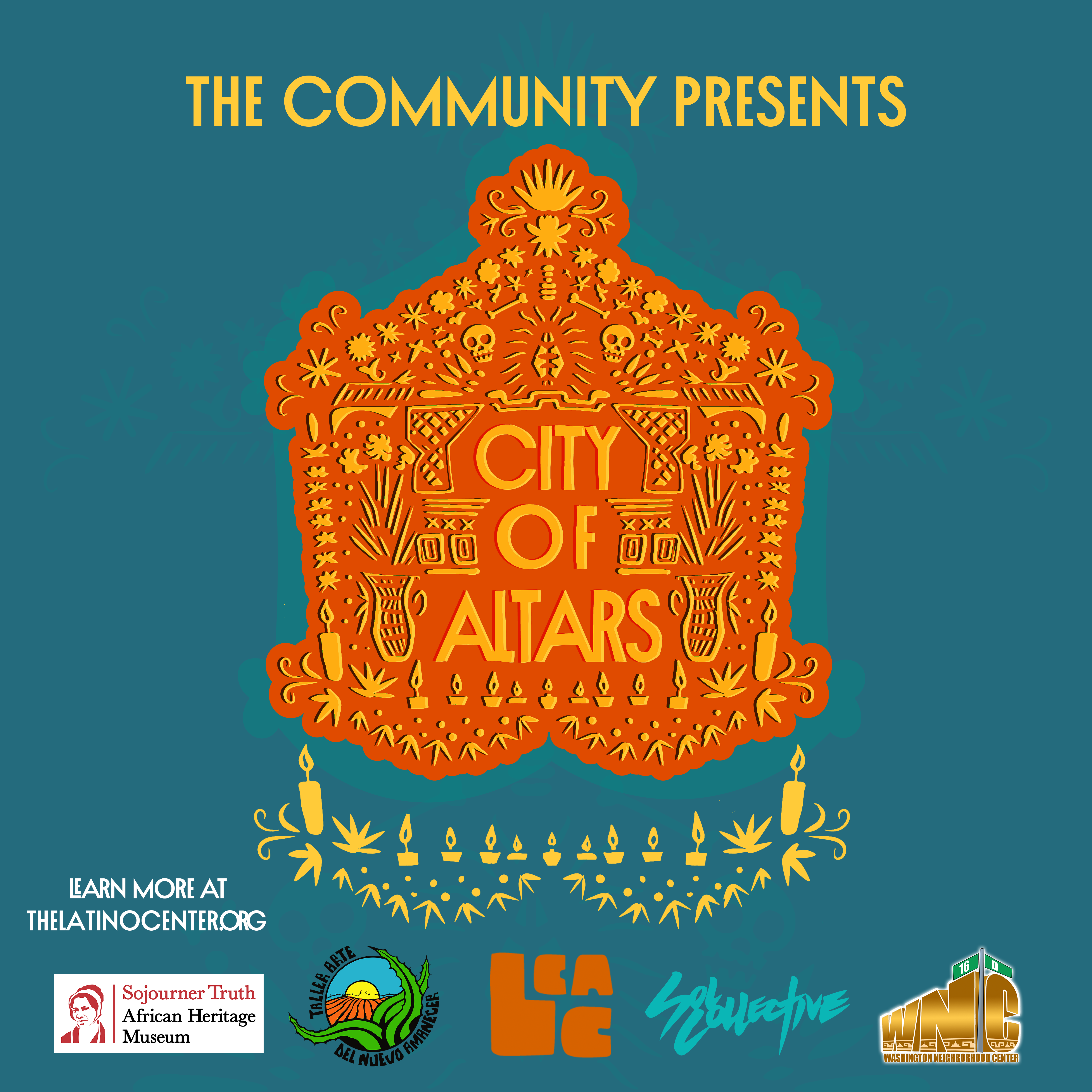
The Latino Center of Art & Culture announces the “City of Altars.”

 www.thelatinocenter.org


We are excited to announce our partnership with our sister organizations for the program called "City of Altars." Thanks to support from the City of Sacramento's (@saccityarts) Capital Region Creative Corps Program with funding from the California Arts Council (@calartscouncil), the City of Altars consists of a collaboration between five leading arts organizations in the Sacramento and Woodland communities, including Latino Center of Art and Culture, Sol Collective, Taller Arte Nuevo Amanecer, Washington Neighborhood Center, and Sojourner Truth Museum African Heritage Museum.

Together, we will activate our spaces throughout the fall of 2023 to honor our respective customs relating to Día de los Muertos and Kwanzaa. Collectively, we will shine a light on the issues that most impact our communities through the sacred practice of altar-making. Community members will be invited to create altars through workshops and will be encouraged to exhibit at our annual events.

Follow each of us to stay informed about this exciting project.
@Sac_LCAC
@Solcollective
@tanawoodland
@thecenter916
@sojomuseum
#cityofaltars #diadelosmuertos #kwanzaa #sacramento #woodland #arts #culture
#Sacramento365 #dayofthedead #cityofaltars

Capital Region Creative Corps Grant
What: City of Altars, a program by the Latino Center of Art and Culture
When: 2023-2024, a bulk of the activities will take place from September to December 2023
Where: multiple sites throughout the region.

Overview: The Latino Center of Art and Culture was granted $117,000 through a Capital Region
Creative Corps grant. The grant's scope allows us to bring in organizational partners to strengthen our programs around Día de los Muertos. The goal is to work alongside sister organizations that will host social justice-driven workshops while co-creating altars alongside members from their organization and the community. 

These sister organizations would also select lead altaristas and artists (5-7 total) who would develop their own cohorts of about 10-15 emerging artists. The goal is to leverage the altar, a sacred artistic practice, as the medium through which our community members share the issues that impact our collective communities.

Kwanzaa is Celebrated December 26th -January 1st - Sojourner Truth African Heritage Museum will host a workshop on Tuesday, December 26th, with the installation of Kwanzaa Altars and judging will happen on December 29th, during the "Kwanzaa Festival of Life, Community, and Culture." 

The Kwanzaa Festival of Life, Community, and Culture is a week-long celebration that honors the achievements of the Black community and provides support. It occurs from December 26 to January 1 at the Sojourner Truth African Heritage Museum.

On Friday, December 29th, the festival is dedicated to Ujamaa, "Cooperative Economics," which is celebrated at the Florin Business Complex. Over 100 African-American businesses and vendors participated in this event.

On Saturday, December 30th, there will be a celebration at the African Marketplace. Celebrating Nia (Purpose) is to make our collective vocation the building and developing of our community to restore our people to their traditional greatness.

On December 31, Kuumba will be celebrated with various creative arts projects and performances catering to the youth. (This falls on a Sunday but most activities will happen on Saturday, TBD ceremonies will happen)

January 1, Imani, is our day of faith. A special ceremony will be held to bring a close to our week-long celebration of life and a closing reception for the City of Altar Installation, a Day of Rest.

Thursday, December 31, 2015

VISUAL ARTS DEVELOPMENT PROJECT- ART AND ACTIVISM

Alpha Bruton, Toni Collie Perry (VADP Board members) presenting.

Panel Discussion- Creative Conversation "Are Black Women Loud"- Del Paso presented by Sojo Art Museum- 2013,  this photo image becomes the art for Creative Conversations, on Blog Talk Radio. The show is a place where artists can schedule a time to call in and talk about their curatorial projects, rant, casual talk, or have a platform to discuss issues that matter. 

The show was launched October 10th - 18th, as part of the United States Department of Arts and Culture, "Dare to Imagine" Imagination Station. 


Stay tuned for more talk, as researchers invite artists to discuss "TACTICAL URBANISM." 


Jennifer Andrea Porras, presentation during the Art and Activism 

Porras has long been inspiring thoughtfulness around civil justice through dance, song, theater, and education. She shared stories from a life of activism, which she has passed on to her young son. Porras is the art center manager for the Taller Arte del Nuevo Amanecer in Woodland.


Presentation at the Crocker Art Museum in Sacramento. YaYa Porras has built her world around activism for decades. The daughter of educator activists, standing up for her beliefs came naturally.

“I learned how to march before I knew how to walk,” she said during her presentation.

The Buena Vista Rancheria of Me-Wuk Indians of California is a federally recognized Indian tribe. The Tribe has been listed by the Secretary of the Interior as such since 1985. The Tribe’s Rancheria land is a 67-acre parcel in Amador County just outside the town of Buena Vista.


 Ancestor
 
YAYA', presents the work she is doing in "Art and Social Justice", and how she and members of her tribe are advocates for social justice issues.


On Nov. 19, four artists from Northern California and beyond presented their work and stories of activism at the Crocker Art Museum’s second Art Beyond Fear panel discussion. The artists who took to the stage represented diverse backgrounds ethnically and professionally, showing how activist art can be woven into our society’s most important conversations through various channels. Dance, education, spoken word, theater, public political actions, and painting were the avenues these artists have used to unite communities in hopes of a better future.


Panelist Artistic Presentations:


  • Oakland native Milton Bowens opened the night with commanding spoken-word pieces accompanied by multimedia collage paintings.
  • Chucha Marquez, a queer Chicano printmaker, and digital illustrator, art is about authentic voice and accessibility. 
  • Sarah Wellington came all the way from New York to share her experience with WE WILL NOT BE SILENT, an ongoing public action language project.


Tickets to the final talk, scheduled for Thursday, Jan. 28 at 6 p.m., can be purchased online or by calling 916-808-1182.

Research: Copyright Credits Art & Activism Go Hand-in-Hand
Posted on November 25, 2015, by TUBE Magazine.

Monday, April 15, 2013

Creation of Living Land Trust for Outdoor Altar Installations- a Continuum

Visual Arts Development Project- "the Land" Rituals and traditions a two-week artist in residency

May 13 – May 25 in Placer County.

The VADP will be the first collaborating organization to partner with the MAP Gallery of Myth, Stories, and Living Traditions to establish a series of land trusts that serve as networks for Altar training and research. "The Land" will serve as a living experiment for sustainable practices and an incubator for personal and collective transformation.

Anita Posey-Lowe lives on three and a half archers in Placer County, where she has a potter's studio, with several areas on her property for pit firing. She has whole-heartedly loaned the use of her land to The Gallery of Myth, Stories, and Living Traditions to expand its outreach program of workshops and outdoor altar installations and to build a permanent structure that will be left on her land in the area we have proposed to erect the outdoor Altar.
The artist has proposed that the panels and other installation elements be a temporary installation that will be deconstructed by the resident artist at the end of the exhibition. The residency will be a series of workshops, intensive structure construction, clearing of the land for ceremonies, artists constructing individual elements of the sculpture, independent studio, time for creative conversation, and libations.
Visual Arts Development Project - Faculty 

Alpha Bruton, Talver Germany-Miller, Anita Posey-Lowe, Andrea Porras (Yaya)

The primary focus areas for this project are:
  • Artist in Residency Projects
  • Creating markers for temporary installation
  • Land Trust for Small Museum
  • Research for permanent markers
2013 TRAINING SCHEDULE
March 23 – 25: Weekend Retreat Visual Arts Development Project,
March 30: De-installation Gallery of Myth, Stories, and Living Traditions.
April 1 – 30: Invitation to guest artists, facilitators, and registration
May 11-12: North Auburn Studio's Tour Mother's Day Weekend
May 13 – 25: Building Living Sculpture Installation- Guest Artist and Preparatory
May 17 – 19: Weekend Retreat Workshop and Studio Intensive
May 18: Ceremony Begins
May 20 – 24: Installations, murals, and layering of the shell
May 25 Community Celebration

MAP - Gallery of Myth, Stories, and Living Traditions
Envisioned to evoke the transformative value of historical and contemporary cultural traditions, MAP's Gallery uses the power of myth, stories, and imagination to give voice to the universality of cultural traditions.
The gallery is an outreach program of the Metropolitan Arts Partnership ("MAP ") and is designed to provide a more significant regional presence. The Gallery of Myth, Stories, and Living Traditions will soon include a companion lecture, workshop, and conference series.
The primary programs of MAP are its workplace giving Arts Fund; the management of the local federal workplace offering program, the Combined Federal Campaign; and the gallery outreach program, which was at the Arts Building in downtown Auburn from 2006 – 2013.
The mission of the Metropolitan Arts Partnership is to support arts education and outreach programs for children and youth in schools, performance venues, and neighborhood centers provided by our members' agencies. MAP members are all certified nonprofit arts organizations based in El Dorado, Placer, Sacramento, Sutter, Yolo, or Yuba Counties.
From 2006 until its closing in March of 2013, the MAP Gallery consisted of temporary installations curated by Founder and Executive Director Michelle Walker, the Artistic Director of the Gallery and Founder of the International Society of Altar Making. In addition, she has facilitated Altar Doing workshops since 1980. Michelle drew from her New Orleans ancestry and interests in Ndebele, Hopi, Bon Po, Tibetan Tantric, and Kundalini philosophies and practices; she integrated those elements into her personal altars and Altar Making over the years.
Co-curator Andrea "YaYa" Porras is an artist and assistant to the Map Gallery, where she was mentored and guided by master artist/Altar Maker Michelle Walker. YaYa, in her own right, has studied the traditions of her ancestry; she is an Aztecan dancer, African-modern dancer, actress, poet, and altar artist from Sacramento, California.
Gallery-Assistant Ondrea Walker is an artist apprentice trained in concept development and installation by the International Society of Altar Making. She attended the San Francisco Art Academy, where her concentration was photography, photo documentary, and photojournalism.

PROPOSED INSTALLATION "the Land" Rituals and traditions Purification Ceremony
Rituals and practices associated with sweating vary regionally and culturally. Ceremonies often include traditional prayers and songs. In addition, in some cultures drumming and offerings to the spirit world may be part of the ceremony, or a sweat lodge ceremony may be a part of another, more extended tradition.
Some standard practices and key elements associated with purification ceremonies include:
  • Training - Most cultures holding ceremonial sweats require that someone undergo intensive training for many years to be allowed to lead a purification ceremony. One of the requirements is that the leader can pray and communicate fluently in the indigenous language of that culture and understand how to conduct the ceremony safely. This leadership role is granted by the Elders of the community, not self-designated.
  • Orientation – The door may face a sacred fire. The cardinal directions may have symbolism in the culture holding the purification ceremonies. The structure may be oriented within its environment for a specific purpose. Placement and orientation of the system within its territory are often considered to facilitate the ceremony's connection with the spirit world and practical usage considerations.
  • Construction – The purification ceremonies are generally built with great care and respect for the environment and materials used. Many traditions construct the purification ceremonies in complete silence, some have a drum playing while they build, and others have the builders fast during construction.
  • Support – In many traditions, one or more persons will remain outside the structure to protect the ceremony, assist the participants, and aid purification ceremony etiquette. Sometimes they will tend the fire and place the hot stones if a system uses stones, though usually done by a designated fire keeper.

Proposed Project-

Creation of Living Land Trust for Outdoor Altar Installations- a Continuum: MAP - Gallery of Myth, Stories, and Living Traditions- Breathing Life into the Gallery 2013. "The Land" will serve as a living experiment for sustainable practices and an incubator for personal and collective transformation.

The initiative for community land trust was known as the Bhoodan or Land Gift movement in the 1950s and 1960s. It gathered people together and asked those with more land than needed to give their poorer sisters and brothers a portion of it. Many of India's leaders participated in these walks from village to village.[i]
 Seeing this, Vinoba altered the Boodan system to a Gramdan or Village gift system. All donated land was subsequently held by the village itself. The town would then lease the land to those capable of working it. The lease expires if the land is unused. The Gramdan movement inspired a series of regional village land trusts that anticipated Community Land Trusts in the United States.

The first organization labeled with the term 'community land trust' in the U.S., called New Communities, Inc., was founded to help African-American farmers in the rural South access farmland and work it with security.
A precursor to this was the Celo Community in North Carolina, founded in 1937 by Arthur Ernest Morgan.

New communities: Robert Swann worked with Slater King, president of the Albany Movement and a cousin of Martin Luther King, Jr., Charles Sherrod, an organizer for the Student Nonviolent Coordinating Committee, and individuals from other southern civil rights organizations in the South to develop New Communities, Inc., "a nonprofit organization to hold land in perpetual trust for the permanent use of rural communities." [ii]
There are currently over 250 community land trusts in the United States. Fledgling CLT movements are also underway in England, Canada, Australia, Belgium, Kenya, and New Zealand. In 2006, a national association was established in the United States to provide assistance and support for CLTs: the National Community Land Trust Network.[iii]
Sustainability
 I am interested in developing a "Community Land Trusts and Art Place Making to expand the MAP Gallery of Myth, Stories, and Living Traditions in the acquisition of land ownership to capture the value of a public investment for long-term community benefit. Instead of leasing or renting gallery spaces for exhibition, the gallery would become landowners.

Conservation Land Trust: A land trust is a nonprofit organization that, as part of its mission, actively works to conserve land by undertaking or assisting in land or conservation easement acquisition or by its stewardship of such land or easements.
 Putting real estate assets into a land trust allows the owner to avoid probate and save on estate taxes when the property passes to heirs. It will also protect the property from liens and judgments that might be brought against an owner. For partners and tenants in common, each owner is insulated from decisions. With a land trust, an owner can privately transfer their beneficial interest in the faith (the actual ownership) without being reported to any governmental agencies. Lastly, a person's property ownership remains confidential with a land trust and does not appear in any county recorder's office or publicly accessible resource.

In particular, Community land trusts attempt to meet the needs of residents least served by the prevailing land market. Community land trusts help communities gain control over local land use and reduce absentee ownership, provide affordable housing for lower-income residents in the community, promote resident ownership and control of housing, keep housing affordable for future residents, and build a strong base for community action.